1 Gram Gold Bars: Complete UK Buyer's Guide
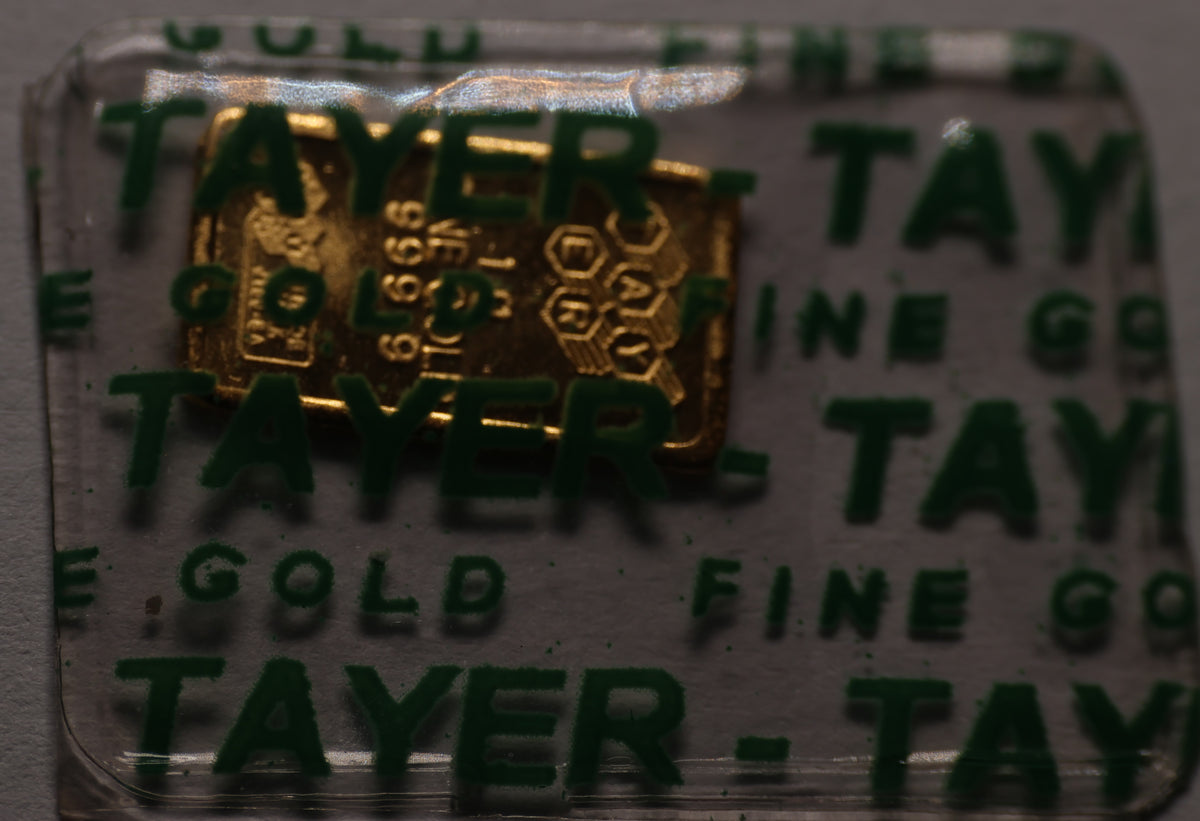
A 1 gram gold bar is one of the smallest standard formats for owning refined physical gold. Most bars sold in the UK contain 999.9 fine gold, are supplied in sealed assay packaging and show the weight, fineness and refiner details.
The format provides a low-weight entry point for buyers who want physical bullion without purchasing a larger bar. The trade-off is a higher premium per gram.
This guide covers the specification, packaging, UK VAT treatment, pricing, storage, resale and the main checks required before purchase.
What is a 1 gram gold bar?
A 1 gram gold bar contains a stated gross weight of one gram and is usually refined to 999.9 fineness, also described as 24-carat gold or 99.99% pure gold.
The bar is typically supplied inside one of the following:
- A sealed assay card
- A tamper-evident blister pack
- A certified presentation card
- Packaging showing the bar’s weight, fineness and refiner
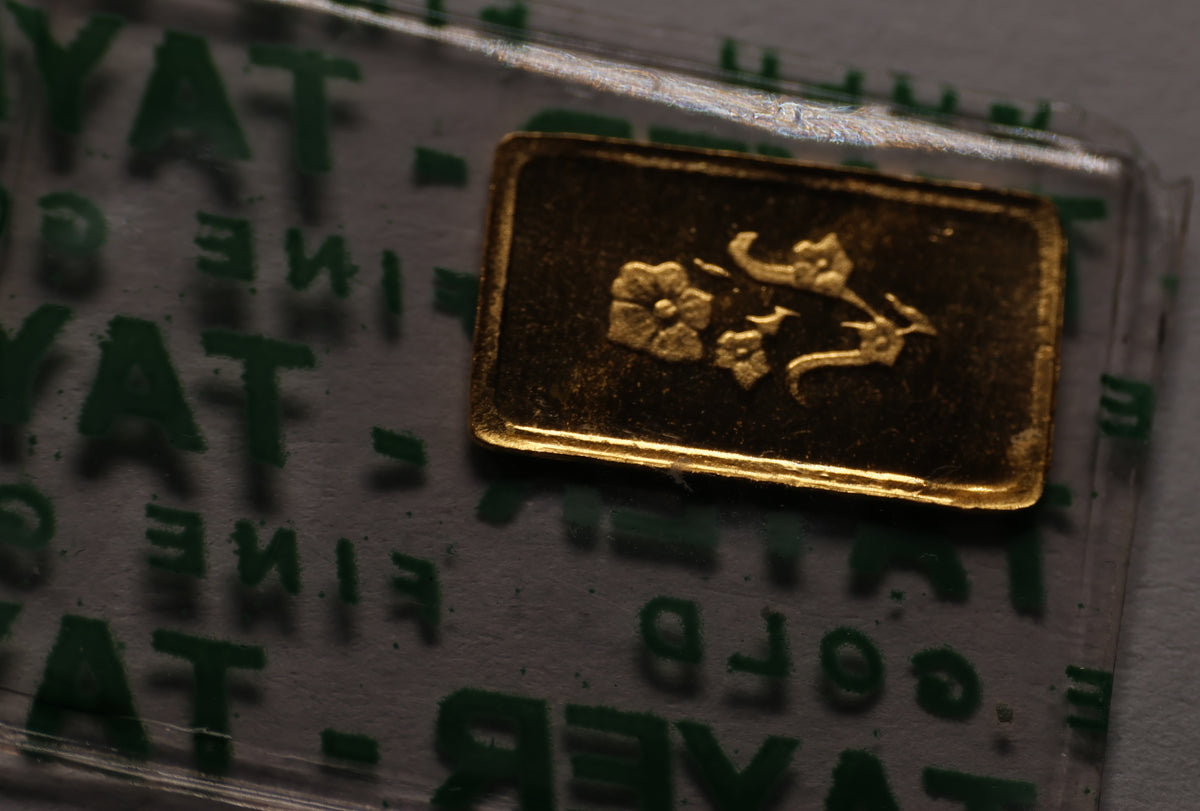
The packaging is part of the product’s identification. It reduces unnecessary handling and keeps the bar with its documentation.
The 1 Gram Tayer Gold Bar is listed by Gold2u as 999.9 fine 24K gold, sealed and certified by Tayer. Product specifications, pricing and availability should be checked on the live product page before purchase.
Why buyers choose 1 gram gold bars
Accessible entry point
A 1 gram bar requires a lower total outlay than a 5 gram, 10 gram or 1 ounce bar. This makes it suitable for buyers starting a physical gold collection or testing a preferred refiner and format.
The lower purchase size does not mean the lowest price per gram. It means the total purchase is smaller.
Gradual collecting
Small gold bars can be acquired individually over time. Each bar remains a separate, identifiable unit rather than forming part of one larger bar.
This approach can suit buyers who prefer staged purchases or who want to compare refiners, packaging designs and certification formats.
Gifting
A sealed 1 gram gold bar is compact and clearly presented. The stated weight and fineness are normally visible on the assay card, making the product easier to identify as a gift.
The format may be used for birthdays, anniversaries, milestone events or collector purchases. The product remains physical bullion rather than a decorative gold-plated item.
Storage
A 1 gram bar requires very little space. Several sealed bars can be organised in a suitable safe or professional storage facility.
The small size does not remove the need for security. Gold should be stored privately in a dry, secure location with purchase documentation retained separately where appropriate.
999.9 fine gold and investment-gold status
999.9 fineness means that 999.9 parts per thousand of the bar are gold. The remaining fraction consists of trace non-gold material.
For UK VAT purposes, qualifying investment gold bars are generally VAT-exempt. HMRC rules apply to investment gold products meeting the required purity and weight criteria. A bar should not be assumed to be VAT-exempt solely because it is small or described as gold.
Before purchasing, confirm that:
- The product is described as investment gold.
- The stated fineness is at least 995 parts per thousand.
- The weight is clearly stated.
- The seller confirms the applicable VAT treatment.
- The invoice identifies the product correctly.
VAT treatment is separate from other tax considerations. Gold bars are not automatically exempt from Capital Gains Tax. Personal tax treatment depends on individual circumstances, transactions and applicable allowances. This article provides general information only and is not personal financial or tax advice.
Refiner, brand recognition and documentation
The refiner or brand identifies the organisation responsible for producing the bar. Recognised refiners can make a product easier to identify and assess during resale.
Brand recognition is not a substitute for authenticity checks. It is one part of the product’s traceability, alongside the fineness, weight, packaging, serial number and seller records.
The assay card or blister pack may show:
- Refiner name or logo
- Bar weight
- Gold fineness
- Serial number
- Assay or certification details
- Security features
Where a serial number is present, it should match the number shown on the associated documentation. Any mismatch is a material issue requiring clarification before purchase.
LBMA Good Delivery accreditation applies to large bars accepted for settlement in the London bullion market. It should not automatically be interpreted as a certification that every small retail bar is itself a Good Delivery bar. The relevant consideration is the identity and credibility of the refiner and the documentation supplied with the specific product. Further information on market standards is available from the London Bullion Market Association.
For additional information on brands, assay cards and packaging, see Gold2u’s article on small gold bars, brands and packaging checks.
Why 1 gram bars have a higher premium
The gold content is only one part of the purchase price. The total price also reflects:
- Refining
- Minting or bar production
- Assaying
- Packaging
- Distribution
- Insurance
- Retail handling
- Seller margin
These costs are distributed across one gram of metal in a 1 gram bar. A larger bar spreads many of the same fixed costs across more gold.
The result is a higher premium per gram for most 1 gram gold bars.
A basic premium calculation is:
Premium percentage = (purchase price − underlying gold value) ÷ underlying gold value × 100
The underlying gold value is based on the current spot price and the bar’s fine gold content. Compare like-for-like products using the same currency, weight, fineness and delivery terms.
The premium may be reasonable where the priority is:
- A low total purchase size
- Gift presentation
- Sealed documentation
- A recognised refiner
- Separate, divisible holdings
- Gradual collecting
A larger bar may be more efficient where the priority is the lowest premium per gram. The appropriate comparison is between the total cost, product specification and intended use.
Practical pre-purchase checklist
Before buying a 1 gram gold bar in the UK, verify the following:
- Weight: The product is clearly identified as a 1 gram bar.
- Fineness: The stated purity is preferably 999.9 fine and meets the relevant investment-gold threshold.
- Refiner: The manufacturer or brand is clearly identified.
- Serial number: Any number on the bar, card or certificate is legible and matches the accompanying documentation.
- Sealed presentation: The assay card or blister pack is intact and shows no unexplained signs of opening.
- Condition: The packaging is consistent with the product description. Minor external marks should be distinguished from damage to the bar.
- Price: The premium over the current gold value is understood and compared with other weights.
- Seller: The business provides clear contact details, product information, delivery terms, returns information and an invoice.
- VAT treatment: The listing or seller confirms whether the product qualifies as VAT-exempt investment gold.
- Records: The order confirmation, invoice and product documentation can be retained together.
A materially incomplete description is a reason to seek clarification before ordering.
Storage and handling
Keep the bar sealed in its assay card or blister pack. Opening the packaging exposes the bar to unnecessary handling and separates it from its original presentation.
Recommended handling practices include:
- Hold the packaging by its edges.
- Avoid touching the gold surface.
- Keep the bar dry and away from chemicals.
- Do not bend, cut or puncture the blister pack.
- Avoid placing heavy items on the assay card.
- Store the bar in a secure home safe or professional facility.
- Retain the invoice and documentation.
The sealed presentation does not guarantee authenticity by itself. It preserves the product’s condition and documentation, while authenticity remains dependent on the refiner, seller and appropriate verification.
Resale and record-keeping
A sealed, clearly identified 1 gram bar is easier to describe to a prospective buyer or dealer. Resale assessment may consider:
- Weight
- Fineness
- Refiner
- Serial number
- Packaging condition
- Documentation
- Current gold price
- Dealer demand
- Buy-back terms
The resale price is not necessarily equal to the original purchase price or the current spot value. The original premium may not be recovered in full.
Maintain a record containing:
- Purchase date
- Seller
- Product name
- Weight
- Fineness
- Serial number
- Purchase price
- Invoice
- Photographs of the sealed packaging
1 gram gold bars compared with natural gold nuggets
A 1 gram gold bar is refined, standardised bullion. Its weight and fineness are stated, and it is commonly supplied with an assay card or blister pack.
A natural gold nugget is a naturally formed specimen. Its shape, texture, colour, provenance and rarity may contribute to its price in addition to its gold content. It is not manufactured to a standard bar weight or uniform shape.

The distinction is therefore functional:
| Feature | 1 gram gold bar | Natural gold nugget |
|---|---|---|
| Form | Refined and manufactured | Naturally formed |
| Weight | Standardised at 1 gram | Irregular |
| Fineness | Usually stated as 999.9 | Depends on the specimen |
| Packaging | Commonly sealed with assay documentation | Presentation varies |
| Price basis | Gold content plus product premium | Gold content plus collector and specimen premium |
| Appeal | Bullion ownership and compact storage | Natural history and collectability |
Gold2u’s gold nuggets collection includes natural Australian gold specimens in various weights and forms. The choice between a bar and a nugget depends on whether standardised bullion or natural collectability is the primary requirement.
Frequently asked questions
Are 1 gram gold bars real gold?
A genuine 1 gram bullion bar contains one gram of refined gold and normally carries a 999.9 fineness marking. Weight, refiner, packaging and documentation should be checked before purchase.
Are 1 gram gold bars VAT-free in the UK?
Qualifying investment gold bars are generally exempt from UK VAT. The product must meet the applicable purity and weight criteria. Confirm the treatment of the specific product with the seller.
Why are small gold bars more expensive per gram?
Manufacturing, assaying, packaging, handling and distribution costs represent a larger proportion of the price when spread across only one gram of gold.
Should the assay card be opened?
The assay card should normally remain sealed. Keeping the packaging intact preserves the original presentation and maintains the connection between the bar, serial number and documentation.
Is a 1 gram bar suitable for resale?
It can be resold, subject to assessment by a dealer or buyer. A recognised refiner, matching serial number, intact packaging and retained invoice may simplify the assessment. A resale price is not guaranteed.
Is a 1 gram gold bar better than a natural gold nugget?
Neither format is universally better. A bar provides standardised refined bullion. A nugget provides a naturally formed specimen whose collector value may depend on shape, provenance and rarity as well as gold content.