Are Gold Coins VAT-Free in the UK? Investment Gold, CGT and What Buyers Need to Know

Are gold coins VAT-free in the UK?
Qualifying investment gold coins are exempt from UK VAT. This means the standard 20% VAT charge is not added to the purchase price at checkout.
The exemption applies to investment gold defined under Group 15 of Schedule 9 to the VAT Act 1994, following the Investment Gold Order 1999. HMRC publishes specific guidance covering eligible coins and their VAT treatment.
The exemption does not apply automatically to every gold-coloured, gold-plated or collectible coin. The coin must meet the relevant investment gold conditions or appear on HMRC’s recognised list.
Browse Gold2u’s gold coins collection.
What counts as investment gold?
For VAT purposes, investment gold generally includes:
- Gold bars or wafers with a purity of at least 995 thousandths, equivalent to 99.5% fineness.
- Gold coins minted after 1800.
- Coins with a purity of at least 900 thousandths, equivalent to 90% fineness.
- Coins that are, or have been, legal tender in their country of origin.
- Coin types normally sold for no more than 180% of the open-market value of the gold they contain.
- Certain coins specifically included on HMRC’s investment gold coin list.
HMRC states that coins outside these definitions are normally subject to VAT at the standard rate. A high collector premium can therefore affect the VAT position if the coin type is normally traded above the applicable threshold.
The relevant test concerns the coin type and its normal selling price. A rare individual coin may have additional collector value, but the VAT treatment cannot be determined by metal content alone.
HMRC investment gold coin guidance provides the current list and criteria.

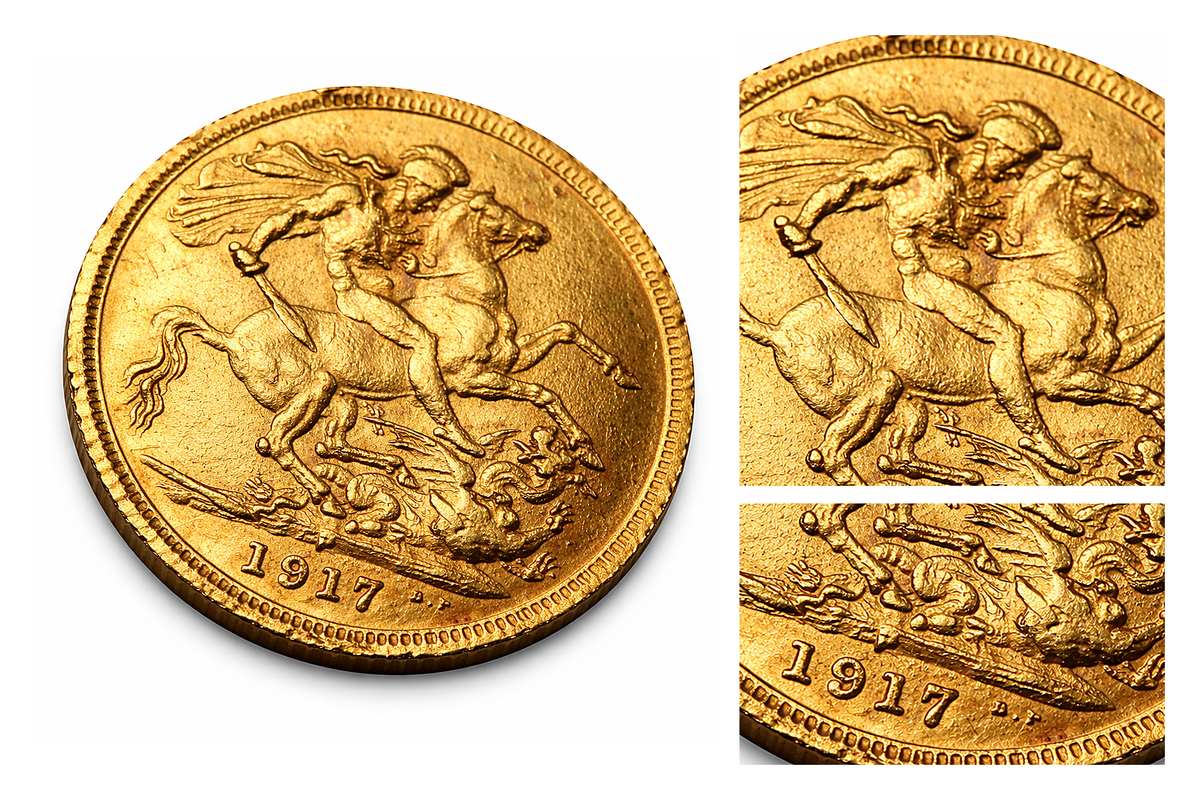
Why a 22ct gold sovereign can be VAT-exempt
A standard British gold sovereign is 22ct gold with a fineness of 916.7, or approximately 91.67% gold. It is therefore below the 99.5% purity threshold that applies to gold bars.
This does not prevent a sovereign from qualifying as investment gold. The purity requirement for qualifying coins is different from the requirement for bars.
A British sovereign generally qualifies because it:
- Was minted after 1800.
- Has a fineness above 900 thousandths.
- Is, or has been, legal tender in the United Kingdom.
- Is normally traded within the relevant price limit compared with its contained gold.
- Is recognised as an investment gold coin under HMRC’s rules.
A full sovereign typically weighs approximately 7.98 grams and contains approximately 7.3224 grams of fine gold. The remaining alloy gives the coin its traditional 22ct composition.
The same principle applies to qualifying British gold Britannias. The coin’s exact date, specification and treatment should still be checked before purchase.
For further comparison, see Gold Sovereigns vs Britannias.
VAT exemption is not the same as CGT exemption
VAT and Capital Gains Tax are separate taxes.
| Tax | Point of application | Treatment of qualifying UK gold coins |
|---|---|---|
| VAT | Charged when a taxable product is supplied | Investment gold coins are exempt |
| Capital Gains Tax | May apply when an asset is disposed of at a gain | UK legal-tender coins are generally exempt |
The VAT exemption concerns the purchase transaction. It does not automatically determine the tax treatment when the asset is later sold.
UK legal-tender coins, including gold sovereigns and Britannias, are generally exempt from Capital Gains Tax because sterling currency is excluded from chargeable assets under the Taxation of Chargeable Gains Act 1992.
Gold bars are different. Bars are not legal tender. A gain on the disposal of a gold bar may therefore be relevant for Capital Gains Tax purposes, subject to the owner’s circumstances, available allowances and current legislation.
Non-UK coins also require separate assessment. A coin may be VAT-exempt as investment gold without receiving the same CGT treatment as a UK legal-tender coin.
The following points should not be conflated:
- VAT exemption does not mean every gold asset is CGT-exempt.
- CGT exemption does not mean every gold product is VAT-exempt.
- A collectible premium does not guarantee a particular tax treatment.
- Individual tax circumstances can affect the result.

Why the VAT exemption matters to a UK buyer
The main effect is the purchase price.
If a qualifying investment gold coin is advertised at £1,000, the buyer normally pays £1,000 rather than £1,200 after adding 20% VAT. The calculation is illustrative only:
- Coin price: £1,000
- VAT on qualifying investment gold: £0
- Total payable: £1,000
For a standard-rated gold product priced at £1,000 before VAT:
- Product price: £1,000
- VAT at 20%: £200
- Total payable: £1,200
The exemption allows more of the purchase price to represent the coin and its dealer premium rather than an additional tax charge.
It does not remove the dealer’s premium, delivery cost, payment charge or collector value. It also does not make every £1,000 coin equivalent to £1,000 of spot gold.
A private buyer does not normally reclaim VAT on resale. Because the original purchase was VAT-exempt, there is no input VAT amount to recover. The resale price depends on the market value, gold content, condition, demand, dealer spread and any numismatic interest.
Gold jewellery, silver and platinum
Gold jewellery is normally treated differently from investment gold. Jewellery includes design, workmanship, settings and other materials. It is generally subject to VAT at the standard rate when sold by a UK VAT-registered business.
Silver and platinum do not receive the same broad investment gold exemption. UK retail sales of silver and platinum coins or bars are commonly subject to 20% VAT, although specific import, export and transaction rules can affect the treatment.
Natural gold nuggets are also not automatically investment gold. A nugget is a raw specimen rather than a qualifying bar or coin. Its price may reflect shape, rarity, provenance, presentation and collector demand.
Product descriptions should be checked before comparing prices between gold coins, bars, nuggets and jewellery.
Records to keep when buying gold coins
A clear record supports future valuation, insurance, resale and tax discussions. Retain:
- Purchase invoice and order confirmation.
- Product description, including coin type, date, weight and fineness.
- Purchase date.
- Seller details and transaction reference.
- Assay, certificate or authenticity documentation where supplied.
- Photographs of the item where the coin is individually identified.
- Delivery and payment records.
HMRC guidance requires purchase invoices for investment gold to be retained for at least six years in relevant circumstances. Keeping the full transaction file for the same period is a practical approach.
The record should distinguish between the coin’s face value, gross weight, fine gold content and total purchase price. These figures are not interchangeable.
VAT-exempt does not mean scam-proof
VAT status does not confirm that a coin is genuine. A fraudulent listing can incorrectly describe a product as VAT-free.
Before buying, verify:
- The dealer’s legal business identity and contact details.
- A fixed business address and functioning customer-service channel.
- The coin’s stated weight, fineness, denomination and issuing authority.
- Whether the photographs show the exact coin or a representative example.
- The invoice and product description.
- Delivery, insurance and returns terms.
- Independent customer reviews and trading history.
- Whether payment details match the named business.
Warning signs include unrealistic discounts, unexplained payment-account changes, pressure to pay immediately, incomplete specifications and refusal to provide written documentation.
The Gold2u guide to buying gold safely in the UK provides a broader purchasing checklist.
Gold coins available from Gold2u
Gold2u lists historical and modern gold coins, including British sovereigns and commemorative issues. Product pages identify available specifications such as manufacturer, gross weight, fine gold content, fineness and dimensions where applicable.
For example, the 1871 Queen Victoria Full Gold Sovereign is described as a Royal Mint coin weighing 7.98 grams, with 7.3224 grams of pure gold and a fineness of 916.7.
Frequently asked questions
Are all gold coins VAT-free in the UK?
No. Qualifying investment gold coins are VAT-exempt. Coins that do not meet the post-1800, purity, legal-tender and normal-price conditions, or are not included on HMRC’s recognised list, may be subject to VAT.
Are gold sovereigns VAT-free?
Qualifying gold sovereigns are generally exempt from UK VAT. Their 916.7 fineness is sufficient for the coin criteria, even though it is below the 99.5% purity requirement for gold bars.
Are gold sovereigns exempt from Capital Gains Tax?
UK legal-tender sovereigns are generally exempt from Capital Gains Tax. This is separate from their VAT treatment and should not be applied automatically to non-legal-tender coins or gold bars.
Are gold Britannias VAT-free and CGT-free?
Qualifying gold Britannias are generally VAT-exempt as investment gold coins. UK legal-tender Britannias are also generally exempt from Capital Gains Tax. The exact coin and the seller’s description should be verified.
Is VAT charged on gold jewellery?
Gold jewellery is generally standard-rated for VAT. It is not treated in the same way as qualifying investment gold because its value includes workmanship, design and other components.
Is this tax advice?
No. This article provides general information about UK gold VAT and Capital Gains Tax. Individual circumstances vary, and tax rules and HMRC guidance can change. Independent advice from a qualified tax professional should be obtained before making decisions based on a specific tax position.