Rare Gold Coins UK: How to Identify Genuinely Collectable Historical and Antique Gold Coins

A gold coin can be old, attractive and made from precious metal without being genuinely rare. Numismatic collectability depends on a combination of rarity, historical importance, condition, originality, authenticity and documented ownership history.
Metal content is only one part of the assessment.
Bullion value and numismatic value
Bullion value relates primarily to the quantity and fineness of gold contained in a coin. Numismatic value relates to the coin as an identifiable historical object.
The distinction is important:
- A common modern bullion coin may contain more gold than a scarce historic coin.
- A low-mintage coin may not be valuable if many examples survive in similar condition.
- A circulated coin may be more collectable than a newer coin if it represents a rare date, mint or variety.
- A cleaned coin can retain its full metal content while losing significant numismatic desirability.
Rare gold coins are therefore assessed as both precious-metal objects and historical artefacts.
1. Identify the coin type and series
The first step is classification. The coin should be identified by:
- Monarch or issuing authority
- Denomination
- Date
- Mint
- Portrait type
- Reverse design
- Edge lettering
- Mintmark or privy mark
- Die variety
- Proof or circulation strike
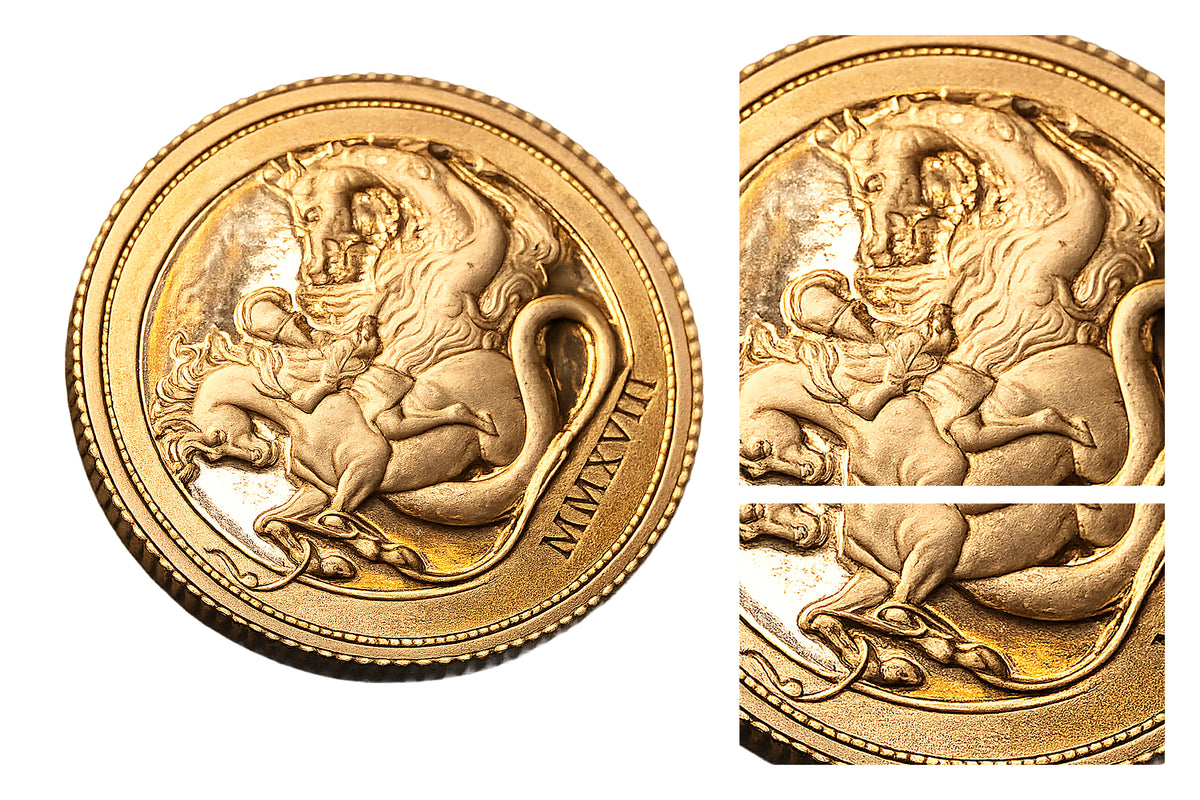
British examples include sovereigns, half-sovereigns, guineas, five-guinea pieces and early gold issues from different mints. Modern commemorative proof coins form a separate category from circulating historical coinage.
The Royal Mint identifies the sovereign as a major series in British numismatics, with a history extending from its first issue under Henry VII to its reintroduction in 1817. Design changes, portraits and important dates create separate collecting areas within the series. Further background is available in The Royal Mint’s guide to notable gold coins.
The description “antique gold coins” is broad. A Victorian sovereign, an early guinea and an ancient gold aureus require different reference standards. The correct series must be established before rarity can be assessed.

2. Assess mintage and survival
Mintage records show how many coins were originally struck. They do not show how many remain today.
Survival can be reduced by:
- Heavy circulation
- Melting during periods of high gold demand
- Official withdrawal
- Damage
- Loss
- Reuse in jewellery
- Destruction during political or economic upheaval
A coin with a relatively high original mintage can become scarce if most examples were later melted. A coin with a low mintage may remain readily available if a large percentage survived in good condition.
This creates three separate questions:
- How many were struck?
- How many are believed to survive?
- How many survive in the required grade?
The third question is often decisive. A date may be common in worn condition but difficult to locate with original surfaces and strong detail.
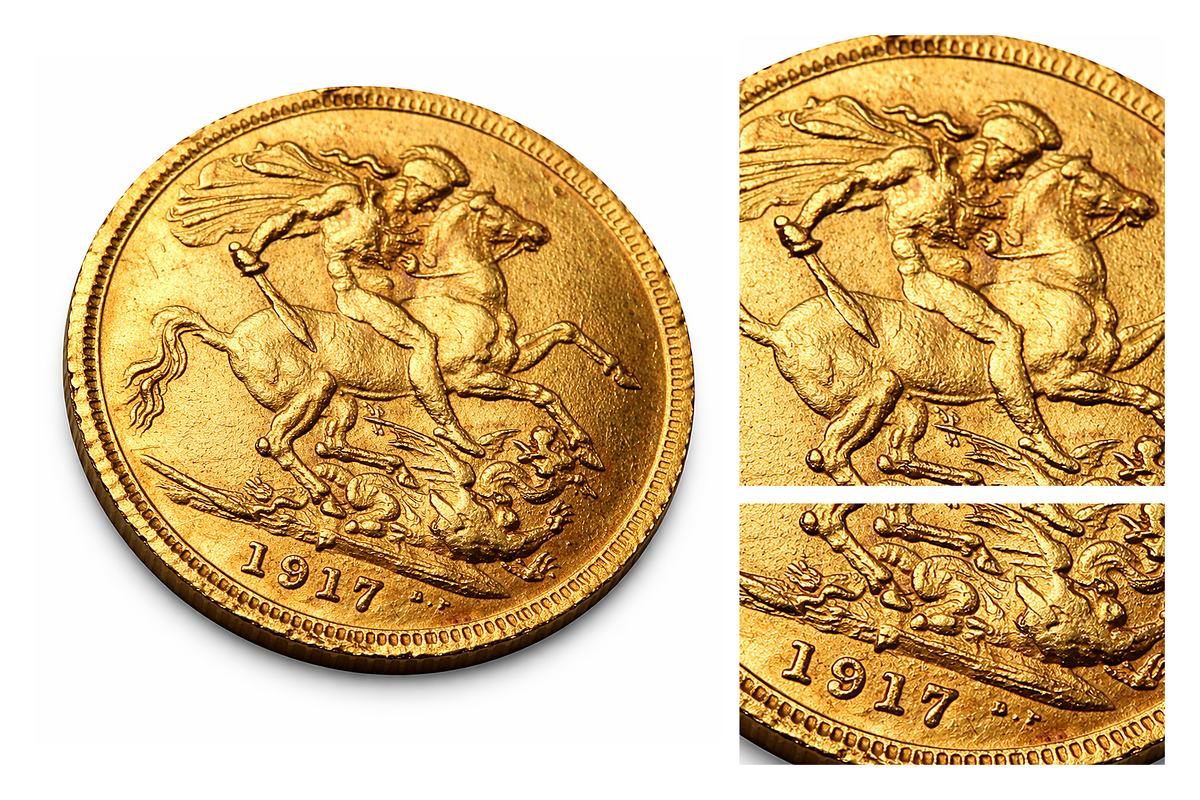
Reported examples of important British rarities include the 1819 sovereign, the 1917 sovereign from the London issue and the 1839 Una and the Lion five-pound piece. These coins are recognised because of a combination of production figures, survival, design significance and collector demand. Mintage alone does not establish rarity.
3. Check for key dates and recognised varieties
A key date is a date that has a recognised level of scarcity or importance within a series. It may be associated with:
- A low production run
- A final or first year of a design
- A change in monarch
- A rare mint
- A small number of surviving examples
- A historically significant event
Varieties occur within the same date and denomination. Differences may include:
- Mintmarks
- Portrait details
- Lettering
- Edge inscriptions
- Die numbers
- Small design changes
- Overdates or corrected details
- Differences in die alignment
The mint is particularly important for gold sovereigns. London, Sydney, Melbourne, Perth and other branch mints produced coins with different identifying marks and collecting significance.
Die numbers can also matter. The Gold2u listing for the 1871 Queen Victoria full gold sovereign identifies a Young Head Shield Back design, no mintmark for the London Mint and die number 75. Such details should be recorded rather than treated as decorative information.
A variety must be confirmed against a specialist catalogue or established reference. A minor visual difference is not automatically a recognised numismatic variety.
4. Examine condition and grading
Condition affects collectability because it records how much of the original design and surface remains.
Traditional UK descriptions include:
- Fine
- Very Fine
- Extremely Fine
- About Uncirculated
- Uncirculated
Third-party grading services use a numerical scale, commonly from 1 to 70. Proof coins use a separate designation from circulation strikes. A certified grade should be treated as an assessment of a specific coin, not as a general description of the date.
Important areas include:
- Hair and facial detail on the portrait
- Crown and lettering
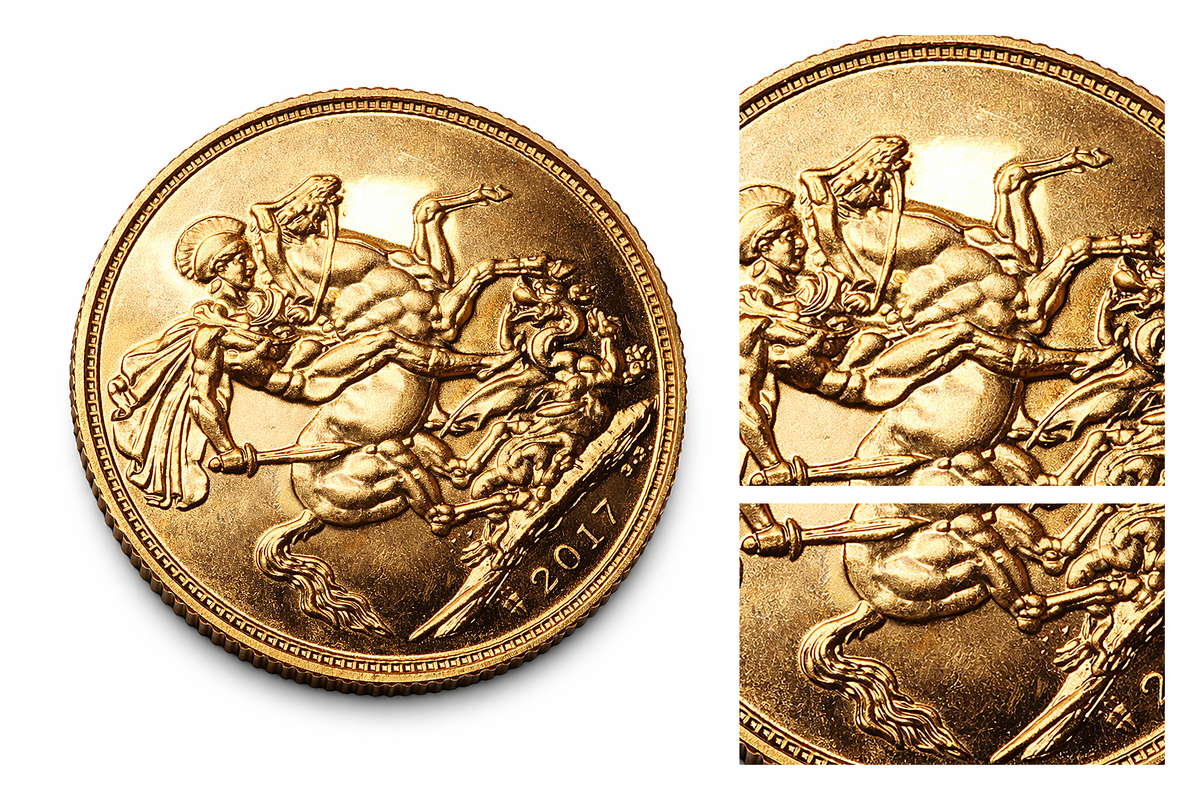
- St George and the Dragon design
- Shield elements
- High points exposed to friction
- Field surfaces
- Edge condition
- Signs of contact or abrasion
Condition must be considered alongside rarity. A common date in exceptional condition may attract collector interest, while a rare date may remain desirable despite moderate circulation. These are separate collecting propositions.
Proof coins require additional checks. Proof surfaces are produced using specially prepared dies and planchets. Hairlines, spotting, handling marks and surface disturbance can materially affect their condition assessment.
5. Confirm originality and avoid cleaned surfaces
Originality refers to the state of the coin’s surfaces and design details. Natural toning, subdued lustre and minor marks consistent with age can be preferable to an artificially bright appearance.
Warning signs of cleaning include:
- Fine parallel hairlines
- Bright, unnatural reflectivity
- Abrasive marks in the fields
- Rounded detail from polishing
- Residue in lettering
- Uneven colour
- A surface that appears brighter than the protected areas
Cleaning removes or disrupts the original surface. It does not improve the coin’s historical condition. Professional grading services may describe a cleaned coin separately rather than assigning it a standard numerical grade.
Historic and antique gold coins should not be polished, dipped in household chemicals or rubbed with cloth. Any conservation requirement should be referred to a qualified specialist.
6. Review provenance and documentation
Provenance is the documented ownership history of a coin. Relevant records can include:
- Auction catalogues
- Previous collection references
- Dealer invoices
- Certificates
- Grading reports
- Museum or institutional records
- Specialist correspondence
Provenance does not replace authentication. It provides supporting evidence and can establish that a coin has appeared in a known collection or reputable sale.
Documentation should correspond to the actual coin. For individually photographed pieces, images, identifying marks, die numbers and condition descriptions should be retained with the purchase records.
A listing that states the actual coin pictured will be supplied provides more identification information than a generic stock photograph. The Gold2u collection includes individually described historical pieces alongside modern and commemorative issues. Current availability and displayed pricing should be checked on the live Shop gold coins collection page.
7. Verify authenticity using multiple points
No single basic test confirms a rare gold coin. Authentication should use several matching characteristics:
- Correct weight
- Correct diameter
- Correct thickness
- Correct fineness
- Accurate portrait and reverse
- Correct edge lettering
- Correct mintmark
- Correct die characteristics
- Consistent surface texture
- Reputable ownership or dealer history
The Gold2u 1871 listing records a weight of 7.98 grams, a fine-gold content of 7.3224 grams, fineness of 916.7 and diameter of 22.05 millimetres. These specifications are useful for comparison, but measurements alone cannot authenticate every historic issue.
Magnetic tests and sound tests can be preliminary screening methods. They are not substitutes for specialist examination. Rare or expensive coins require assessment by an established dealer, numismatist or professional grading service.
8. Separate scarcity from metal content
A coin’s gold content does not determine its numismatic rarity. The following factors should be recorded separately:
| Assessment area | What it establishes |
|---|---|
| Weight and fineness | Precious-metal composition |
| Mintage | Original production quantity |
| Survival | Estimated remaining population |
| Key date or variety | Series-specific scarcity |
| Grade | Physical condition |
| Originality | Surface integrity |
| Provenance | Documented ownership history |
| Demand | Collector interest in the type |
A coin is more likely to be genuinely collectable when several of these factors align. A standard bullion issue may have excellent authenticity and gold content but limited numismatic scarcity. A historical coin may have lower intrinsic metal content but greater rarity, stronger provenance and more important design or mint characteristics.
Rare gold coins identification checklist
Before acquiring historical or antique gold coins, record:
- The series, monarch and denomination.
- The date and issuing mint.
- The mintage and estimated survival.
- Any recognised key-date status.
- Mintmarks, privy marks, die numbers and edge details.
- Proof or circulation status.
- Condition and grading terminology.
- Evidence of cleaning or surface alteration.
- Weight, diameter and fineness.
- Provenance and supporting documentation.
- Whether the photographs show the exact coin supplied.
- Whether the description distinguishes numismatic features from metal content.
Genuine collectability is established through documented characteristics, not age alone. Rarity must be supported by mintage and survival information. Condition must be assessed independently. Original surfaces and reliable provenance add further confidence. The gold content remains relevant, but it is not a substitute for numismatic evidence.