Vintage Diamonds vs Lab-Grown Diamonds: Which Is Better for Your 2026 Engagement Ring?
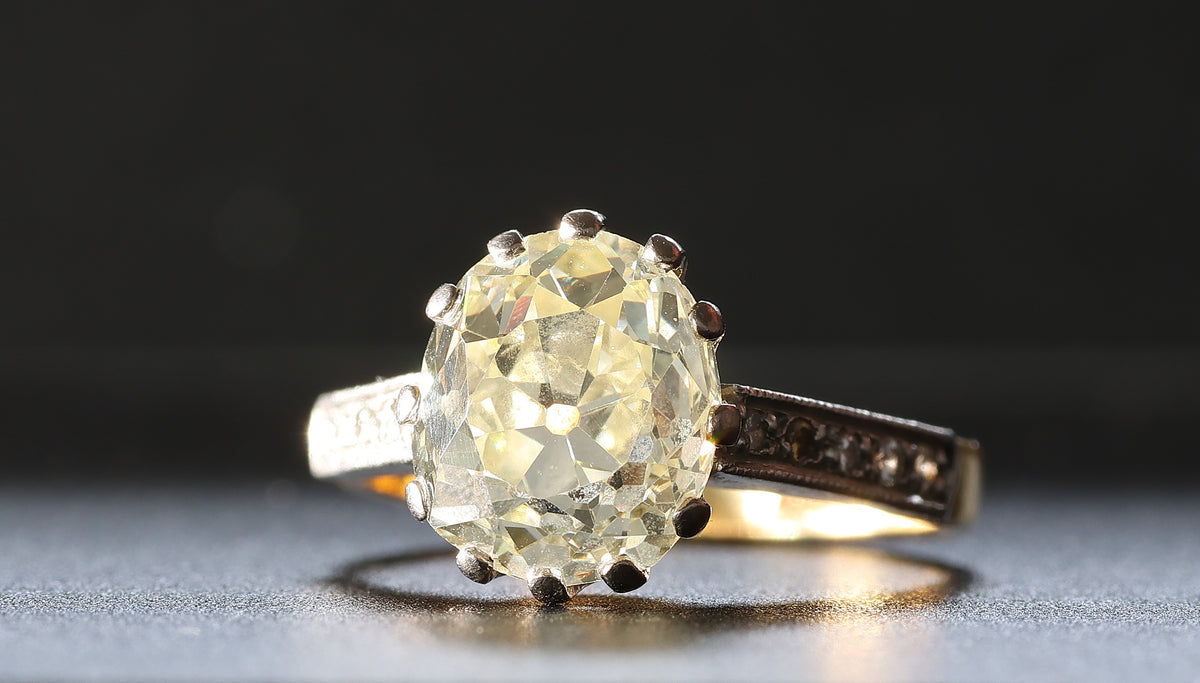
The 2026 engagement ring debate is increasingly focused on two contrasting choices: the individuality of a vintage diamond and the price, availability, and documented origin of a lab-grown diamond.
Both are genuine diamond options. Their differences relate primarily to origin, cutting style, history, appearance, availability, and long-term market behaviour.
For a ring with distinctive character and historical faceting, an old mine cut diamond offers qualities that a newly produced stone cannot replicate. For maximum carat weight and modern precision at a lower initial price, a lab-grown diamond is usually the more practical choice.
What is a vintage diamond?
“Vintage diamond” is a broad term. It can describe:
- A natural diamond cut decades ago.
- A diamond removed from an older ring and reset.
- An estate or antique ring containing its original stone.
- An antique cutting style, such as an old mine cut, old European cut, or rose cut.
A vintage diamond is not necessarily an old mine cut. The terms refer to different attributes. “Vintage” generally concerns age, provenance, or previous ownership. “Old mine cut” describes a particular cutting style.
Old mine cut diamonds were generally hand-cut before the widespread adoption of modern precision cutting. They commonly feature:
- A cushion or squarish outline.
- A high crown.
- A small table.
- Broad, irregular facets.
- A deep pavilion.
- A visible open culet.
These proportions produce broad flashes and a softer pattern of light than the sharper scintillation associated with a modern round brilliant cut. The facet arrangement may display minor asymmetry. This is part of the stone’s historic identity rather than a manufacturing defect.
The GIA guide to old mine cut diamonds provides further technical background on the style.
What is a lab-grown diamond?
A lab-grown diamond is crystallised carbon produced in a controlled laboratory environment. It is not a diamond simulant such as cubic zirconia or moissanite.
Its chemical composition, crystal structure, hardness, and optical properties are fundamentally those of a natural diamond. The distinction is origin:
- A natural diamond formed through geological processes.
- A lab-grown diamond formed through chemical vapour deposition or high-pressure, high-temperature technology.
Lab-grown diamonds are available in modern shapes and cutting styles. A laboratory-grown stone can also be cut in an antique-inspired cushion or old mine style.
That does not make it a vintage diamond. A lab-grown stone may reproduce the visual proportions of an old mine cut, but it does not carry the same historical age, hand-cut provenance, or antique setting.
Vintage diamonds and lab-grown diamonds compared
| Consideration | Vintage or old mine cut diamond | Lab-grown diamond |
|---|---|---|
| Origin | Natural diamond, usually previously mined and often previously mounted | Created in a laboratory |
| Cutting style | Often hand-cut with broad, irregular facets | Usually precision-cut, although antique-inspired styles are available |
| Appearance | Softer flashes, visible culet, individual facet pattern | Bright, controlled scintillation and strong symmetry in modern cuts |
| Availability | Limited and dependent on existing inventory | Reproducible in a wide range of sizes and grades |
| Historical value | May include age, provenance, and period craftsmanship | No historical age, even when cut in an antique style |
| Environmental consideration | Reuses an existing diamond and may avoid new extraction | Avoids traditional mining but requires energy for production |
| Price structure | Determined by rarity, condition, design, provenance, and stone quality | Determined primarily by carat, colour, clarity, cut, and production costs |
| Resale market | Established estate and natural-diamond market | Resale conditions remain less established and prices have generally declined as supply has expanded |
Appearance: antique character versus modern brilliance
The most immediate difference is visual.
A modern lab-grown round brilliant is usually cut for optical performance under current grading standards. Its facets are arranged with high precision to maximise brightness, fire, and scintillation. The result is a crisp and symmetrical appearance.
An old mine cut diamond behaves differently. Its larger facets create broader flashes rather than a dense pattern of small reflections. The open culet may be visible through the table. The stone may display a warmer body colour or internal characteristics that would be minimised in a modern diamond.
This does not make one appearance objectively superior. It is a question of optical preference.
A modern diamond ring suits a clean, symmetrical design. A vintage diamond ring suits settings with milgrain, hand engraving, yellow gold, platinum, filigree, or other period details.
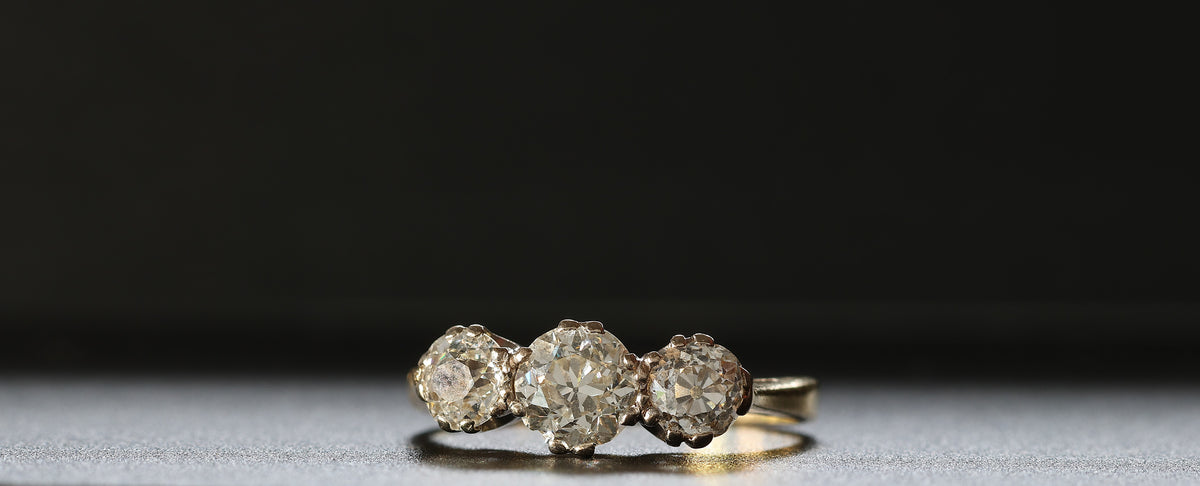
Gold2u’s Victorian-Era Old Cut Diamond Three Stone Ring demonstrates the relationship between antique-style faceting and a traditional three-stone design. The listed ring has a total diamond weight of 1.75 carats.
Sustainability and sourcing
Both options require precise language.
A vintage or estate diamond uses an existing stone. Purchasing one does not create demand for a newly mined diamond, and the associated jewellery may also reuse an existing metal setting. This supports a circular approach to jewellery consumption.
A lab-grown diamond avoids traditional extraction and large-scale mining disturbance. Its environmental impact is not automatically zero, however. Production requires substantial energy, and the total impact depends on manufacturing technology, electricity sources, facility efficiency, and supply-chain data.
Unqualified terms such as “eco-friendly” or “sustainable” can therefore be misleading. The relevant question is what evidence supports the specific claim.
For a buyer prioritising reuse and minimal new material extraction, an estate or vintage diamond ring may be the stronger option. For a buyer prioritising laboratory production and documented modern supply-chain information, a certified lab-grown diamond may be preferable.
Price and value
Lab-grown diamonds generally provide greater carat weight for the initial purchase price. Their controlled production makes it easier to source a particular size, shape, colour, clarity, or setting style.
Vintage diamonds are priced differently. The 4Cs remain relevant, but they do not fully determine value. Other factors include:
- Rarity of the cutting style.
- Quality and condition of the setting.
- Period of manufacture.
- Maker or designer.
- Provenance.
- Evidence of restoration.
- Integrity of the stone and mount.
A smaller old mine cut may command more interest than a larger modern stone because its facet pattern, age, or setting is unusual. Conversely, a vintage ring requiring extensive restoration may involve additional cost after purchase.
Lab-grown diamonds should not be treated as guaranteed investments. Their resale value is affected by falling production costs and expanding availability. Natural vintage diamonds also do not provide a guaranteed return. Rarity and desirability can support long-term interest, but no resale outcome is assured.
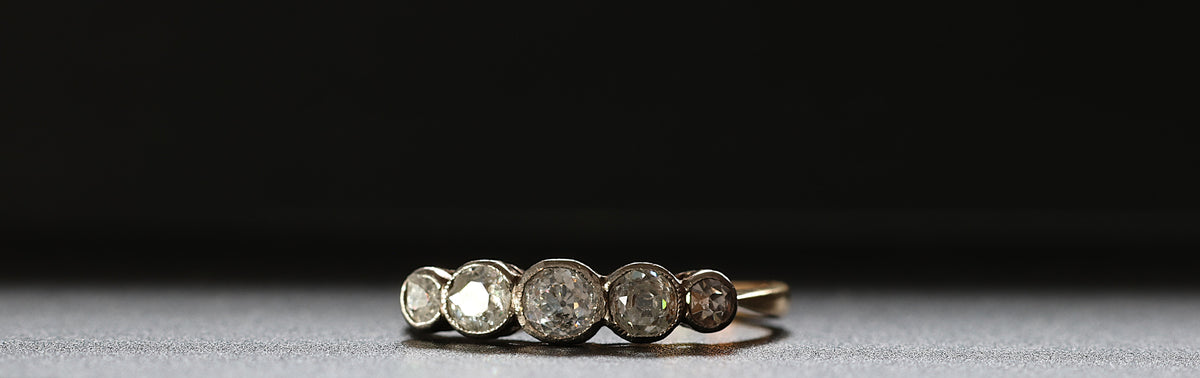
The Five-Stone Old Cut Diamond Heirloom Ring illustrates a multi-stone vintage configuration. Its appeal is based on the combined effect of the old-cut stones, the setting, and the overall period appearance rather than on a single modern centre stone.
Certification and inspection
Documentation is important for either choice.
For a vintage diamond ring, the following should be established where possible:
- Diamond identity and treatment disclosure.
- Carat weight or total diamond weight.
- Metal purity.
- Setting condition.
- Previous repairs or alterations.
- Any available laboratory report or provenance.
- Whether the stones are original to the setting.
Old mine cut diamonds may not receive a modern round-brilliant cut grade because the contemporary cut-grade system is not designed for their proportions. Visual inspection and specialist assessment are therefore particularly important.
For a lab-grown diamond, the documentation should clearly identify laboratory origin. The report should correspond to the stone being purchased and should include relevant grading information, such as carat weight, colour, clarity, and cutting style.
An antique-inspired lab-grown diamond should not be described as a historical old mine cut unless its actual origin and cutting history support that description.
Which diamond ring is better for 2026?
A lab-grown diamond is generally better when the priorities are:
- Maximum carat weight.
- Modern brilliance.
- Consistent symmetry.
- Broad availability.
- A lower initial purchase price.
- A laboratory-created origin.
A vintage or old mine cut diamond is generally better when the priorities are:
- Individuality.
- Historical faceting.
- A softer, broader pattern of sparkle.
- Antique or estate design.
- Reuse of an existing natural stone.
- A ring with visible provenance and period character.
The renewed interest in antique cuts among Gen Z and Millennial couples reflects a preference for less uniform jewellery. Celebrity engagement rings and bridal editorial coverage have increased visibility for unusual shapes, antique settings, three-stone designs, and old mine cut diamonds. The result is a stronger market conversation around individuality rather than standardisation.
Final assessment
Neither option is universally better.
A lab-grown diamond is a genuine diamond with modern availability, predictable specifications, and strong price efficiency. It is suitable for a contemporary diamond ring where size, precision, and budget control are primary considerations.
A vintage diamond, particularly an old mine cut diamond, offers a different form of value. Its historical faceting, irregular symmetry, and existing material history cannot be reproduced fully by a newly manufactured stone. A laboratory-grown diamond can imitate the style, but not the age or provenance.
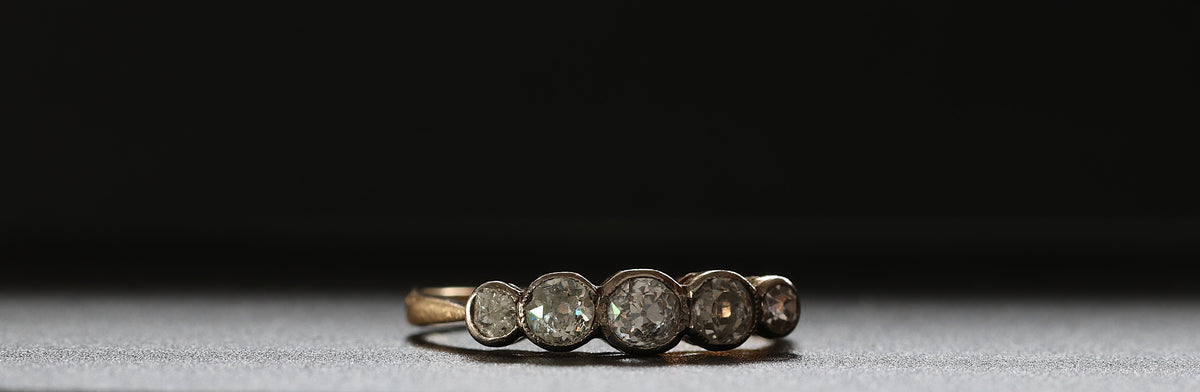
For a distinctive engagement ring in 2026, the decision is therefore between controlled modern production and documented historical character. Gold2u’s old mine cut diamond jewellery collection includes vintage rings and antique-cut pieces for buyers assessing the second category.