What Is an Old Mine Cut Diamond? Value and Buying Guide
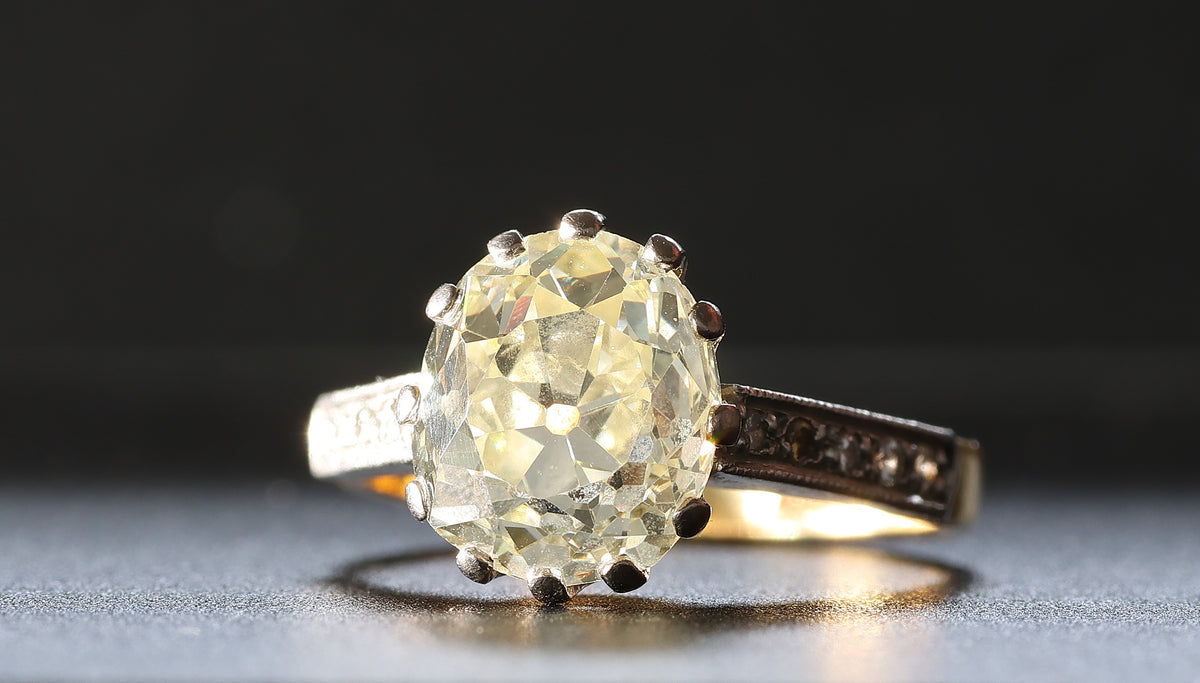
An old mine cut diamond is an antique diamond cut by hand, primarily during the 18th and 19th centuries. It is usually recognised by a cushion-shaped outline, softly rounded corners, a high crown, a small table and a large open culet.
Old mine cut diamonds were cut before modern computer modelling, laser technology and standardised proportions. Each stone was shaped according to the form of the rough diamond and the judgement of the cutter. The result is individual faceting, irregular symmetry and a distinctive pattern of broad flashes.
What is an old mine cut diamond?
The old mine cut developed during the period when diamond cutting was performed manually using mechanical polishing wheels and diamond powder. Cutters worked with the natural shape, inclusions and cleavage lines of each rough stone.
The typical features are:
- Cushion or slightly rectangular outline
- Softly rounded corners
- High crown
- Small table
- Deep pavilion
- Large, open culet
- Broad, chunky facets
- Slightly irregular symmetry
The culet is the facet at the bottom of a diamond. In a modern brilliant cut, it is usually pointed or extremely small. In an old mine cut, the culet can be clearly visible as a small central opening or facet when viewed from above.
A visible culet is not automatically a defect. It is a defining feature of the antique cutting style. It contributes to the stone’s distinctive contrast and helps identify the diamond as an old cut rather than a modern brilliant.
No two old mine cut diamonds are identical. Variations in outline, facet placement, depth and symmetry are expected. These differences reflect hand craftsmanship rather than manufacturing inconsistency.
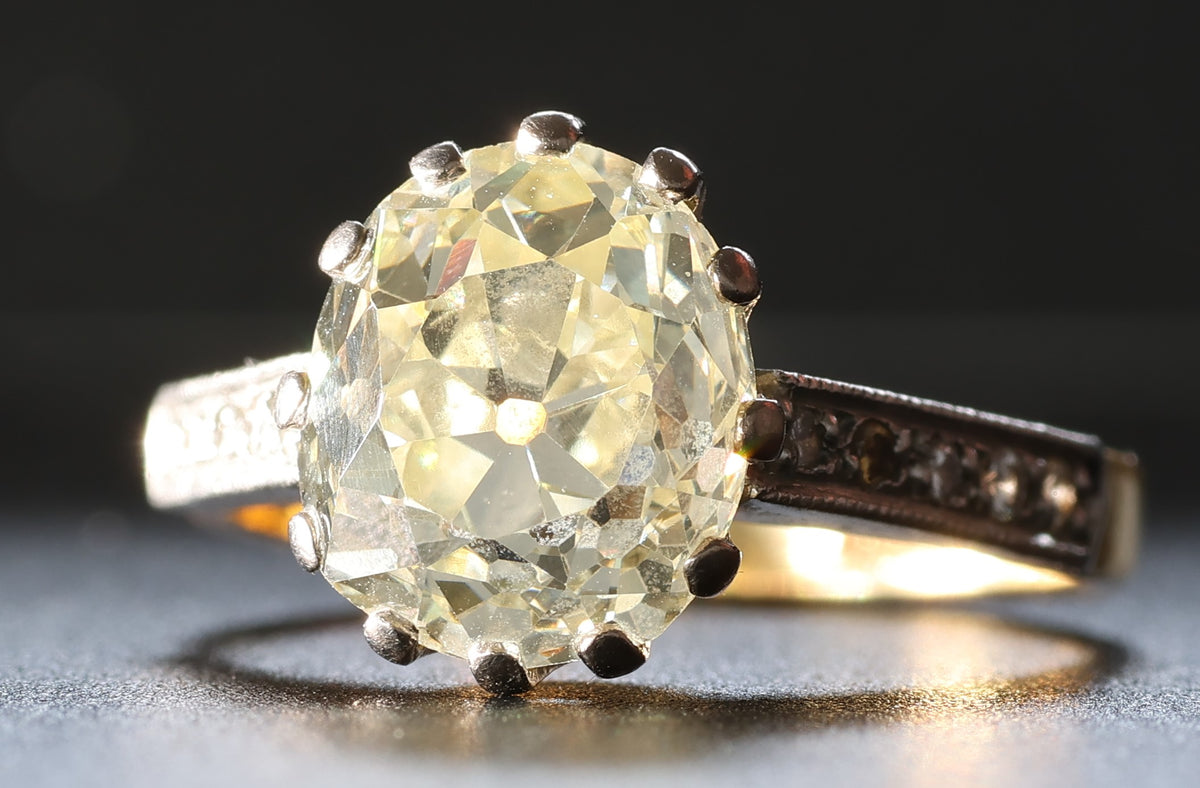
How old mine cut diamonds look
Old mine cuts generally produce broad flashes of light rather than the rapid, evenly distributed scintillation associated with modern round brilliants.
Their high crowns and smaller tables create visual depth. The large culet may appear as a visible central feature. Individual performance depends on the proportions, condition, facet arrangement and lighting environment of the particular stone.
Many old mine cut diamonds appear especially attractive in warm or low lighting. Their appearance is often described as softer, deeper and more atmospheric than the brighter, sharper effect of a modern brilliant.
The term old cut diamond can be used broadly in the trade. It may refer to old mine cuts, old European cuts and other historic cutting styles. Specific identification should be based on the shape and facet characteristics rather than the description alone.
Old mine cut vs old European cut vs modern round brilliant
| Feature | Old mine cut | Old European cut | Modern round brilliant |
|---|---|---|---|
| Outline | Cushion-shaped, with softly rounded corners | Generally round | Round and highly symmetrical |
| Cutting tradition | Hand cut to follow the rough diamond | Historic hand-cut or early machine-assisted tradition | Precision cut to modern proportions |
| Period | Mainly 18th and 19th centuries | Developed mainly from the late 19th to early 20th century | 20th and 21st centuries |
| Crown and table | High crown and small table | High crown and small table | Generally larger table and controlled modern proportions |
| Culet | Large and open; often visible | Visible or open culet | Usually pointed or very small |
| Overall impression | Soft, individual and antique | Round, lively and historic | Bright, crisp and symmetrical |
An old European cut should not be confused with an old mine cut. The old European cut is normally round, while the old mine cut is typically cushion-shaped.
The full differences are covered in Gold2u’s guide to old mine cut vs old European cut vs modern brilliant diamonds.
What determines old mine cut diamond value?
Old mine cut diamond value is determined by the stone and the complete piece of jewellery. Modern laboratory grades remain relevant, but they do not capture every factor that matters in an antique diamond.
Carat weight
Carat weight remains a major value factor. Larger old mine cut diamonds are scarce because the cut is no longer produced in the same historical form.
A substantial 5 carat diamond with genuine antique characteristics, attractive proportions and good condition is particularly rare. Weight alone does not establish value, but large antique stones can command significant collector interest.
Condition
Condition affects both market value and wearability. Chips, abrasions, a damaged culet or a heavily worn girdle may reduce value. Minor surface wear can be expected in an antique diamond, particularly where the stone has remained in its original setting.
The condition of the setting must also be assessed. A well-preserved period mount can add value, while extensive damage or poorly executed repairs can reduce it.
Proportions and cut quality
Old mine cut diamonds were not cut to a single modern formula. Value depends on the visual result:
- Balanced cushion outline
- Attractive facet pattern
- Lively face-up appearance
- Controlled depth
- Pleasing crown height
- Symmetry that suits the stone
An irregular outline can be a positive feature if it contributes to the character of the piece. Excessive depth, a dull face-up appearance or distracting asymmetry may reduce desirability.
Colour and clarity in historical context
Many antique diamonds display warmer colour than modern white diamonds. Slight yellow or brown body colour is common and may suit the period setting and the visual character of the stone.
Clarity must be considered in context. An eye-clean antique diamond can be more desirable than a higher-clarity stone with weak light return or unattractive proportions. Small inclusions can be consistent with age and hand cutting, but chips and structural damage require separate assessment.
Originality of the setting
An original or period-correct setting can add substantial interest. A Victorian, Edwardian or Georgian ring retains more historical value when the diamond, mount and design belong to the same period.
A recently reset antique diamond may still be valuable, but it does not carry the same significance as a complete historic piece. Original claws, hallmarks, engraving, milgrain work and construction details can help establish authenticity.
Period and provenance
Documented age, maker attribution, original receipts, family history and previous ownership can support value. Provenance is most relevant when it is credible and supported by documentation.
A ring identified as Victorian, Edwardian or Georgian should be assessed through its construction, metalwork, hallmarks and design. A date stated in a listing is not, by itself, proof of age.
Rarity and collector demand
Old mine cut diamonds are no longer produced in large quantities using the original craft process. Genuine examples survive mainly in antique jewellery, estate pieces and previously owned stones.
Collector demand is focused on unusual shapes, larger carat weights, attractive facet patterns, original settings and pieces with credible provenance. Individuality is a central part of the appeal.
Auction performance and scrap value
Antique jewellery can achieve prices well above its scrap or melt value when the piece contains desirable diamonds, skilled craftsmanship, historical interest or a scarce design.
Auction results for strong examples of antique jewellery have outpaced the value of the metal alone. Scrap value accounts primarily for the precious-metal content. It does not fully account for the diamond, setting, workmanship, provenance or collector demand.
This distinction is important. Not every antique item will outperform its scrap value. Condition, authenticity, quality and demand determine whether a piece has meaningful value beyond its material content.
How to buy an old mine cut diamond
Start with the complete piece
Assess the ring, brooch, bracelet or pendant as a complete object. The setting affects how the diamond appears, how secure it is and whether the design is historically coherent.
An attractive old mine cut diamond in a damaged or incompatible setting may require restoration. A smaller diamond in an original, well-preserved period piece may have stronger collector appeal.
Expect character, not uniformity
Hand-cut diamonds are not expected to match modern standards of exact symmetry. Differences between stones are normal.
The relevant question is whether the outline, proportions and facet arrangement produce an attractive result. A visible culet and minor asymmetry are not automatically negative.
Inspect claws and metal
Check the setting for:
- Worn or broken claws
- Loose stones
- Thinning shank or gallery
- Solder marks
- Previous resizing
- Repaired shoulders
- Distortion around the setting
- Missing or replaced accent stones
Structural repairs should be disclosed and assessed before purchase. Antique settings can be delicate, particularly where the metal has been repeatedly worn or resized.
Check the diamond for chips
The rounded corners of an old mine cut can still be vulnerable to impact. Inspect the girdle, corners, culet and facet junctions for chips and abrasions.
A chip is different from a natural inclusion. A gemmological assessment may be required where the condition is unclear.
Use video viewings
Photographs can conceal depth, facet variation and condition. A video viewed in daylight and indoor lighting can provide more useful information about the stone’s movement and surface condition.
Video is also useful for checking whether the culet is visible, whether the diamond appears lively and whether the setting has any movement.
Understand grading limitations
Antique diamonds may not receive the same type of grading report as modern stones. Some laboratories provide reports with measurements and observations, but cut grades designed for modern brilliant diamonds may not be applicable.
A report should be considered alongside the stone’s age, history, setting, condition and face-up appearance. Modern grading terminology does not fully describe the value of an individual antique diamond.
Why old mine cut diamonds are trending
Interest in old mine cut diamonds and other vintage diamonds has increased among younger jewellery buyers. Several factors contribute to the trend.
First, antique cuts provide a visible alternative to standard modern engagement-ring designs. Their irregular outlines and individual faceting make each ring different.
Second, existing antique diamonds can align with interest in reuse and lower demand for newly mined materials. The environmental position of a previously owned diamond depends on the complete supply chain and restoration process, but the stone itself is not newly extracted.
Third, younger buyers increasingly value provenance, craftsmanship and design history. An antique diamond can offer a documented period, original setting and construction method that a newly manufactured ring cannot reproduce.
The result is stronger demand for rings that combine wearable design with historical character.
Gold2u old mine cut diamond jewellery
Gold2u’s old mine cut diamond jewellery collection includes antique and vintage pieces with individual diamond character.
The 3 Carat Old Cut Diamond Ring features a substantial antique centre stone in an Edwardian platinum and gold setting.
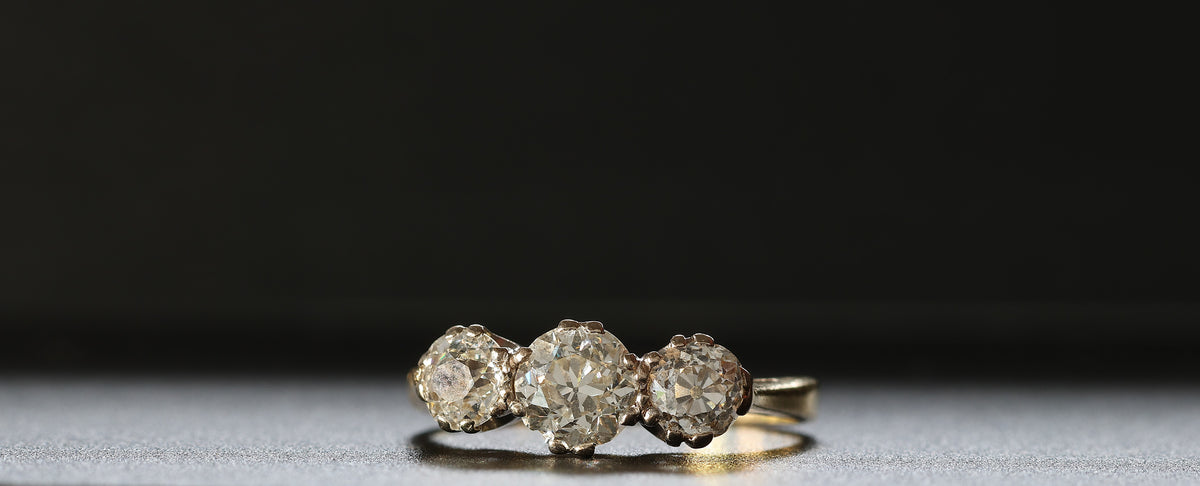
The Victorian-Era Old Cut Diamond Three Stone Ring – 1.75 Carats Total presents three historic stones in a period-style trilogy design.
Each piece should be assessed by its diamond characteristics, setting, condition, age and documentation rather than by carat weight alone.
Frequently asked questions
Is an old mine cut diamond always antique?
No. Genuine historical old mine cuts are antique, but modern diamonds can be cut in an old mine style. The listing should state whether the stone is an original antique cut, a newly cut antique-style diamond or a recut stone.
Is a visible culet a flaw?
No. An open, visible culet is a characteristic feature of many old mine cut diamonds. It should be assessed for damage, but its visibility alone is not a defect.
Are old mine cut diamonds worth more than modern diamonds?
Not automatically. Value depends on carat weight, condition, proportions, colour, clarity, setting, provenance and demand. A rare antique diamond in an original period setting can command more than a comparable modern diamond, while a damaged or poorly proportioned example may not.
Are old mine cut diamonds suitable for engagement rings?
Yes, provided the stone and setting are structurally sound. Claws, girdle condition, chips, metal thickness and previous repairs should be checked before regular wear.
What is the difference between an old cut diamond and an old mine cut diamond?
“Old cut diamond” is a broad term for historic diamond cuts. “Old mine cut” generally identifies a specific cushion-shaped antique cut with a high crown, small table and open culet.
Are 5 carat old mine cut diamonds rare?
Yes. A genuine 5 carat antique old mine cut diamond with attractive proportions, good condition and credible history is uncommon. The value depends on the complete assessment, not weight alone.